
Close
Machine Vision solutions
Roima solutions
Machine vision can improve the quality of goods and services, streamline processes, and enable new, innovative products.
Smarter vision for smarter operations
Machine Vision transforms how businesses ensure quality, automate processes, and unlock new efficiencies. At Roima, we combine cutting-edge vision technology with deep industry expertise to deliver solutions that do more than see – they understand, adapt, and improve your operations. Whether you're optimizing logistics, fine-tuning manufacturing, or driving digital integration, our Machine Vision solutions are built to deliver precision, performance, and real value from day one.

What is Machine Vision?
Machine vision is like giving eyes to a machine. It uses cameras and computers to “see” and understand what’s happening visually, just like humans use their eyes and brains. But machines can do it faster, more accurately, and without getting tired.
For example, in a factory, a machine vision system can check every product on a conveyor belt to ensure nothing is broken or missing, like spotting a cracked bottle or a missing label. In a hospital, it might help scan barcodes on medication or track surgical tools.
Thanks to smart software (like artificial intelligence) and high-quality cameras, machine vision can work in very tough environments, like inside noisy factories or under poor lighting. It helps businesses improve quality, reduce mistakes, and automate tasks that used to be done by people.
Machine vision = Cameras + Processing + Intelligence
It involves using cameras or sensors to capture images and then software (often with AI or deep learning) to analyze those images for decision-making.

Roima’s approach to Machine Vision
Roima’s machine vision offering goes beyond hardware installation. We work as a long-term partner to design, configure, and integrate the right solution for your process and production needs. Our services include:
- Feasibility studies and proof-of-concepts
- Technology selection and proof-of-concept
- Turnkey solution delivery
- Integration with MES, SCADA, ERP, WMS, or automation systems
- AI and deep learning-powered vision applications
- Ongoing support, maintenance, and optimization
Our deep knowledge of manufacturing and logistics processes ensures your machine vision system becomes a seamless part of your operations, adding real value from day one.
Roima’s expertise in machine vision includes image processing algorithms, machine learning, deep learning, and various tools related to these technologies. We keep ourselves up-to-date on the latest advances in related technologies and actively implement them in our projects.
Key benefits of Machine Vision
Machine vision brings significant value across industries by enhancing inspection processes, increasing production efficiency, and enabling smart automation. Below are the core benefits that make machine vision a critical asset in modern operations.

Improved quality control
Detects defects, deviations, or irregularities with greater consistency than the human eye, spotting issues like missing labels or microscopic cracks even at high speeds.

Increased speed and throughput
Processes thousands of items per minute, significantly accelerating inspection and production cycles without compromising quality.

Higher accuracy and precision
Performs micron-level measurements ideal for high-stakes applications like microchip, circuit board, or medical device inspection.

Enables automation
It supports robotic guidance and automated sorting, reducing manual labor in repetitive or hazardous tasks, such as guiding robotic arms with high precision.

Reduced operational costs
Cuts long-term costs by minimizing rework and scrap, lowering labor needs, and preventing defective products from reaching customers.

Data collection for analytics
Captures and logs visual data that can be used for trend analysis, process optimization, and predictive maintenance.

Standardization and compliance
Ensures consistent product quality and supports compliance with industry regulations in sectors like food, pharmaceuticals, and electronics.

Improved workplace safety
It reduces the need for human involvement in dangerous, high-speed, repetitive or high-temperature environments, protecting workers and minimizing accidents.
Machine Vision integration
Machine Vision becomes even more powerful when integrated with broader digital systems. By connecting visual intelligence with operational data, businesses can automate, optimize, and scale more effectively.
Machine Vision in Logistics & WMS
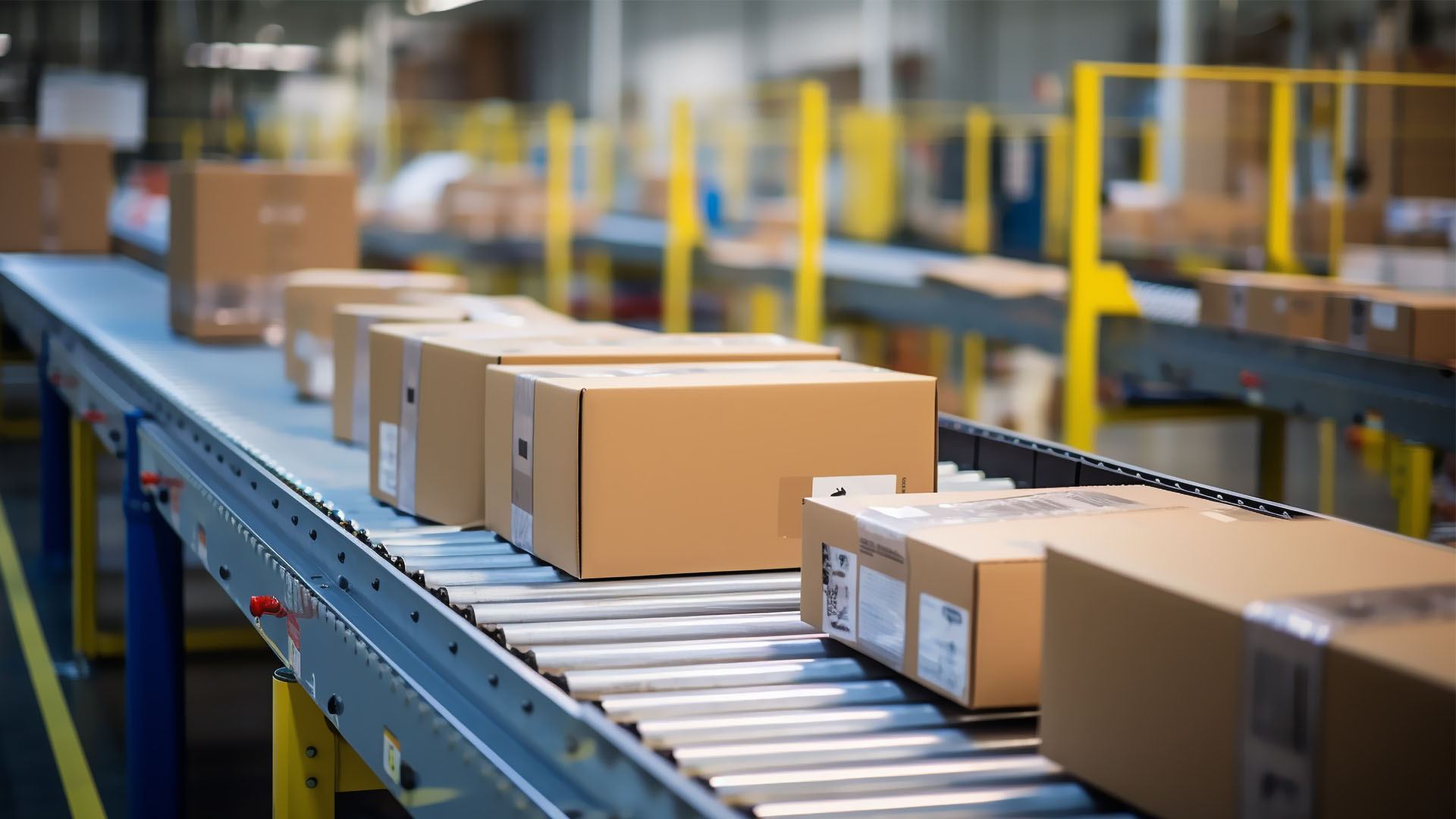
Used for automated sorting, barcode reading, package inspection, and tracking. When integrated with a Warehouse Management System (WMS), it enhances inventory accuracy and speeds up fulfillment.
Machine Vision and MES
Feeds real-time quality and production data into the Manufacturing Execution System. Enables smarter decision-making, better traceability, and faster responses to quality issues on the shop floor.
Machine Vision and SCADA
Adds a visual layer to SCADA by providing live inspection data and visual triggers. Useful for condition monitoring, safety alerts, and process validation in automated control systems.
Machine Vision and IBP
Supports Integrated Business Planning by supplying accurate production and quality data. Helps align operational reality with supply chain forecasts and strategic planning.
Machine Vision and ERP
It closes the loop by sending inspection and tracking data into ERP systems. It supports end-to-end transparency from production to inventory, sales, and customer delivery.
Machine Vision across industries
Machine vision enhances accuracy, speed, and automation across diverse industries. From quality control in manufacturing to safety and tracking in logistics and healthcare, it helps organizations streamline operations, reduce errors, and improve decision-making.









Ready to see the difference?
Let’s bring intelligent vision to your operations. Whether you’re exploring automation, improving quality control, or integrating vision into complex systems, Roima is your expert partner, from concept to implementation and beyond.
FAQ Machine Vision
What is Machine Vision?
How does Machine Vision work?
What are the types of Machine Vision?
- 2D Vision: This is used for basic shape, size, and contrast detection. It is common in label or surface inspections.
- 3D Vision: Adds depth perception. Useful for shape validation, robotic picking, and guidance, and volume measurements.
- Multispectral/Hyperspectral Vision: Captures data beyond visible light, identifying material properties or hidden defects.
- Thermal Vision: Detects heat signatures. Used in electronics, safety monitoring, and predictive maintenance.
How are Machine Vision systems used?
Machine Vision is used for:
- Quality inspection (e.g., scratch detection, component presence)
- Measurement and gauging (e.g., verifying dimensions)
- Identification (e.g., reading barcodes or QR codes)
- Guidance (e.g., positioning a robot arm)
- Sorting (e.g., by size, shape, or color)
How is Machine Vision used with AI?
What is the role of Machine Vision in robotics?
What is the difference between Machine Vision and Computer Vision?
- Machine Vision: Industrial-focused, real-time, and often integrated with automation systems. Typically includes imaging and processing hardware and software.
- Computer Vision: This broad field includes consumer and research applications (e.g., face recognition and medical imaging) where the focus is on image processing software algorithms.
Think of Machine Vision as a specialized and extended branch of Computer Vision, where systems are built for industrial environments while applying appropriate hardware.
What’s the difference between rule-based and AI-powered Machine Vision?
- Rule-based: Uses fixed rules like “if size < X, reject.” Great for predictable and controlled environments. Output is possible to understand through these fixed rules and can be adjusted with suitable parameters.
- AI-powered: Uses training data to recognize patterns and make decisions. Ideal for complex or variable conditions (like fabric wrinkles or organic materials and shapes). Output is controlled mainly by teaching data and its quality.
What types of Machine Vision systems are there, and what can they do?
- Smart Cameras: All-in-one devices that include lens, processor, and software. Simple to install and configure for applications with low to medium complexity.
- PC-based Systems: More powerful and customizable, used for complex applications needing high processing power.
- Embedded Vision Systems: Compact and cost-effective, used in smart devices or edge applications. Ideal for highly customized high-volume solutions.
Each system type is chosen based on speed, complexity, cost, and integration needs.
What kind of defects can Machine Vision detect?
How accurate is Machine Vision?
What does Machine Vision typically do?
- Inspects parts/products on a production line
- Measures dimensions or detects defects
- Reads barcodes, QR codes, or text (OCR)
- Identifies and tracks objects
- Guides robots or equipment based on visual cues
Where is Machine Vision used?
- Manufacturing: Quality control, defect detection
- Food & Beverage: Checking packaging, fill levels
- Logistics: Code and markings reading, dimensioning
- Pharma: Verifying labels, tablet counting
- Automotive: Inspecting welds, assemblies
- Electronics: PCB inspection, component placement
Products and solutions

Insights


Want to know more?
Contact us by using the form or by reaching out to one of our experts directly. We're here to assist you!